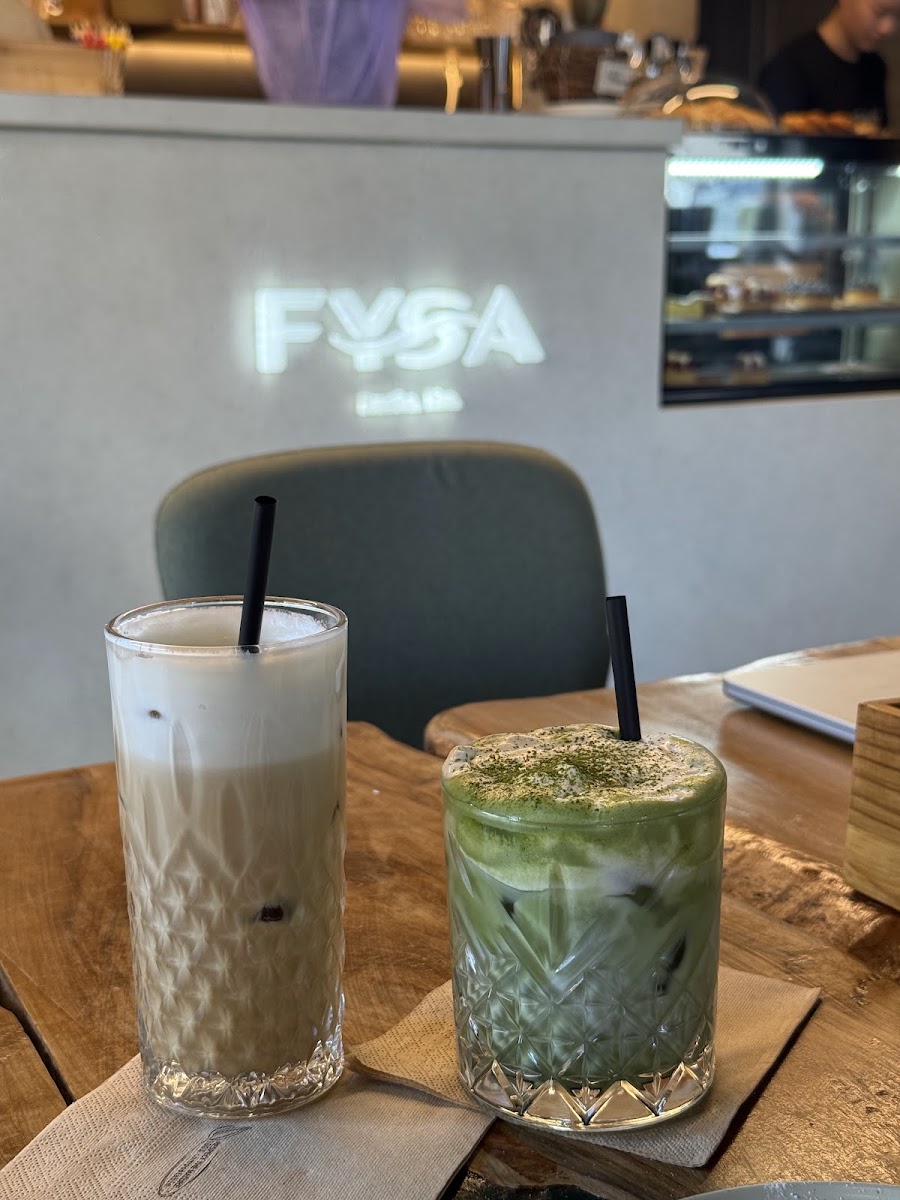
What matcha actually is
Matcha is not "ground green tea". It's tencha: a leaf grown in the shade for 20–30 days before harvest. Shading forces the plant to produce more chlorophyll and more L-theanine — hence the deep green and the sweet, grassy taste. After harvest the leaves are steamed, dried, stripped of stems and veins, and finally stone-ground: a traditional mill produces about 30–40 grams per hour. That slowness is what you pay for — and it's what you taste in the cup.
Ceremonial or culinary?
Ceremonial grade comes from the first leaves of the spring harvest: vivid jade green, a round taste, almost no bitterness. Culinary grade comes from more mature leaves: more bitter, duller in colour, fine for baking but not for drinking on its own. The simplest test is colour: if the powder leans olive or yellowish, it isn't ceremonial. At FYSA we use Japanese ceremonial grade only, even in our lattes.
Why matcha should never be bitter
If a matcha ever tasted bitter or like "cut grass" to you, the problem was almost never the matcha — it was the water. Above 80°C the catechins extract aggressively and cover everything. We prepare ours with water at 75–80°C, sifted first and whisked with a bamboo chasen to a fine foam. The result is velvety, sweet-vegetal, with that umami finish that vaguely recalls good broth.
The gentle caffeine
A cup of matcha contains caffeine — but together with L-theanine, an amino acid that slows its absorption. Translation: no spike and no crash. A flat, lucid energy that lasts for hours — the reason Zen monks drank it before meditation, and the reason it works so well at four in the afternoon, when an espresso would be too much and a chamomile too little.
The matcha at FYSA
Matcha Latte — hot or iced, with fresh whole milk or oat milk: the softest way into the matcha world. Matcha Coconut — with coconut milk, for a more tropical finish. And for purists, on request, the usucha: just matcha and water, whisked to order, served the way it's done in Kyoto.
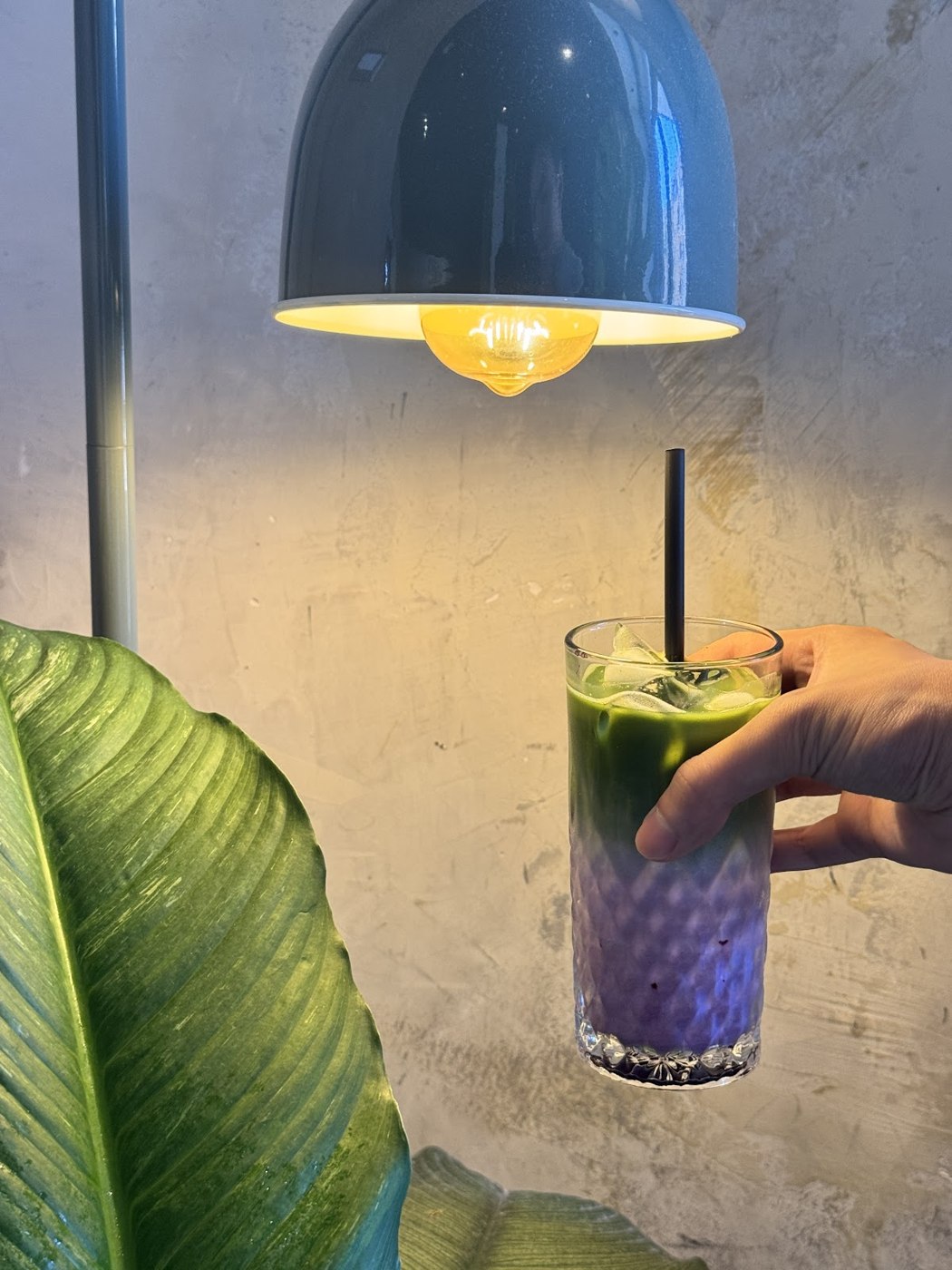
If it's your first time
Start with the iced Matcha Latte: the milk rounds it off, the cold refreshes, and it's the easiest way to find out if you like the taste. Second visit, try it hot, where the aroma opens up more. Third — ask us for the usucha, and taste matcha the way it's been drunk for six hundred years.
Where to find us
FYSA is at Piazza di Ponte Lungo 1, Rome — San Giovanni/Appio Latino, on the border with Tuscolano — 1 minute on foot from the "Piazza Ponte Lungo" exit of Metro A. Open every day from 9:00 to 19:00. If you've been looking for real matcha in Rome, now you know where we are.