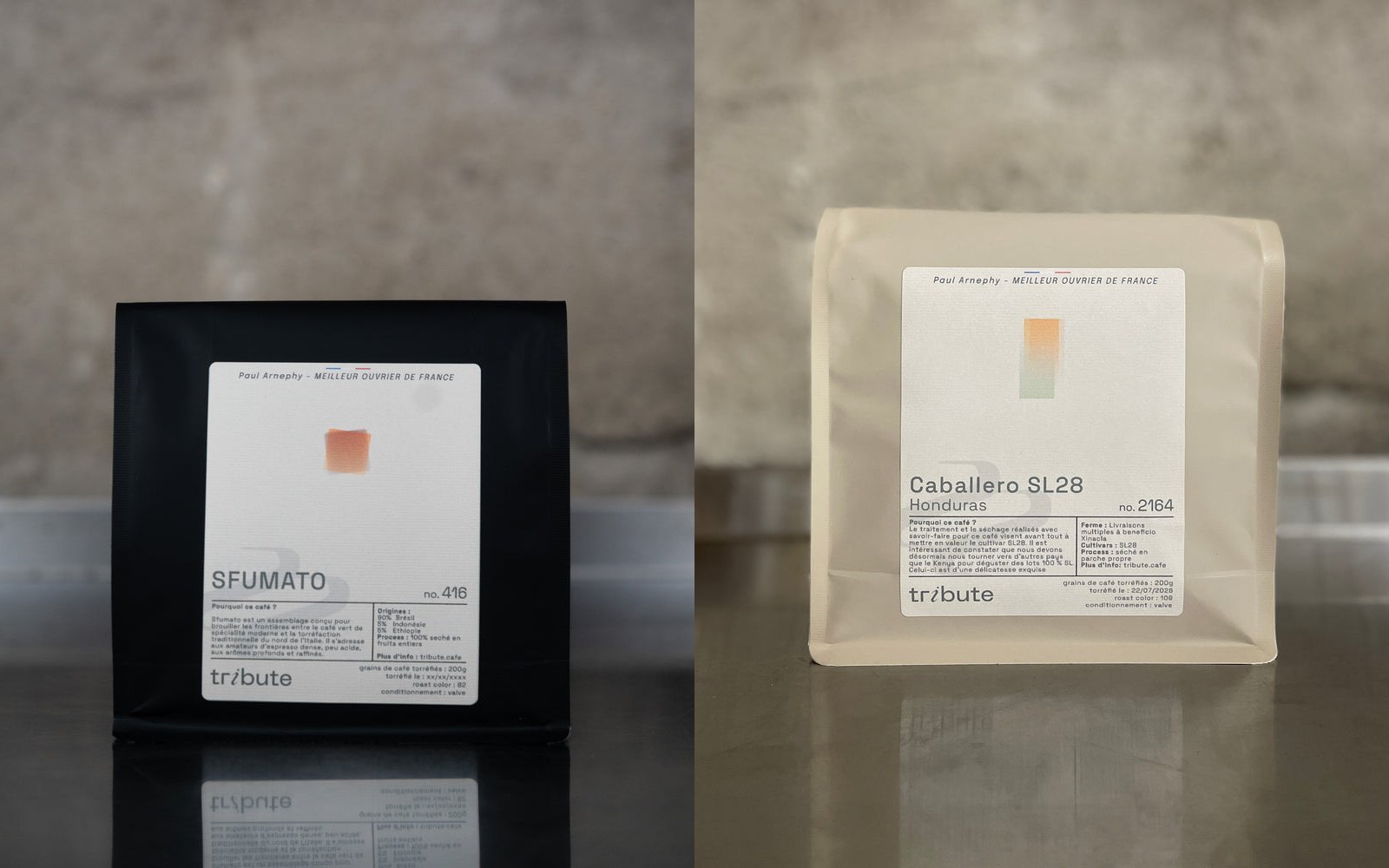
We haven't stocked everything under the sun. Four coffees, chosen to cover the two main ways of brewing at home — espresso and filter — plus a selection of tools for beginners and for anyone ready to go a step further.
Which coffee to choose
If you have an espresso machine (bean-to-cup included), start with SFUMATO. Tribute built this blend halfway between today's specialty green coffee and the traditional roasting of northern Italy: a dense, low-acid espresso tasting of chocolate and ripe fruit, and excellent with milk. It comes in 200 g bags and in a 1 kg format.
A single-origin alternative for espresso is Guatemala Family Vides, from the Vides family's historic Finca La Bolsa: Bourbon and Caturra, a gentle cup of milk chocolate and caramel.
If you brew filter coffee (V60, Chemex, any dripper), the two to try are lighter and more aromatic:
Honduras Caballero SL28 — SL28 is a variety usually linked to Kenya; here it is grown and processed with great care in Honduras. Floral and elegant, with notes of green tea and dried berries.
Colombia Bolney & Adele Reinoso — Pacamara — a large bean with a remarkably clean profile, somewhere between floral, herbal and fruity, with an unexpected hint of thyme. The most unusual of the four.
A starter kit for filter coffee
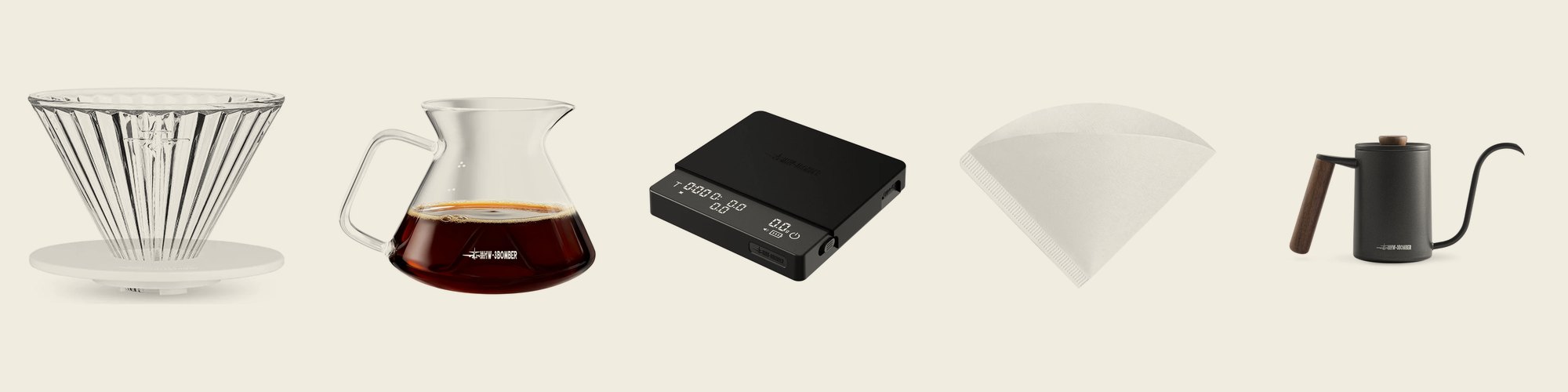
Good filter coffee at home takes fewer things than you might think:
A dripper — the Elf V01 in glass is simple and lets you watch the extraction; the Meteorite is the more "pro" option. Paper filters in the right size (V01). A server to brew into. A scale with a timer: the tool that changes the result the most, because it lets you repeat the same recipe every day. A gooseneck kettle, to pour slowly and exactly where you want — the electric Assassin also holds the temperature.
If you want to go one step further, the Racing M1 hand grinder: grinding fresh is the biggest difference you can taste in the cup.
A recipe to get started
For one large cup: 15 g of coffee ground medium-fine (like table salt), 250 g of water at 92–94 °C.
Rinse the filter with hot water and discard it. Add the coffee, tare the scale and start the timer. Pour about 40 g of water and wait 30–40 seconds — the "bloom", when the coffee swells and releases gas. Then pour slowly, in circles, up to 150 g; pause a few seconds and continue to 250 g. The water should finish draining at around 2:30–3:00.
If the coffee tastes sour and thin, grind a little finer. If it's bitter and heavy, a little coarser. Change one thing at a time.
If you have an espresso machine
A few small tools make home espresso far more consistent: a WDT tool (fine needles that break up clumps in the grounds), a tamper sized for your basket, a puck screen that spreads the water more evenly and keeps the shower screen clean, and a milk pitcher with the right spout if you enjoy latte art.
How to store your beans
Air, light, heat and moisture are coffee's enemies. Keep it in an airtight container, away from the stove, and not in the fridge. Buy little and often: a 200 g bag makes about 13 cups of filter. And grind only what you need, right before brewing.
How to buy
The shop is in-store only, at Piazza di Ponte Lungo 1, open every day from 9:00 to 19:00. You'll find every product with prices on our Shop page. To make sure an item is in stock before you come by, write to fysacafe@gmail.com or on Instagram @fysa_cafe — and if you're not sure what to pick, just ask at the bar.