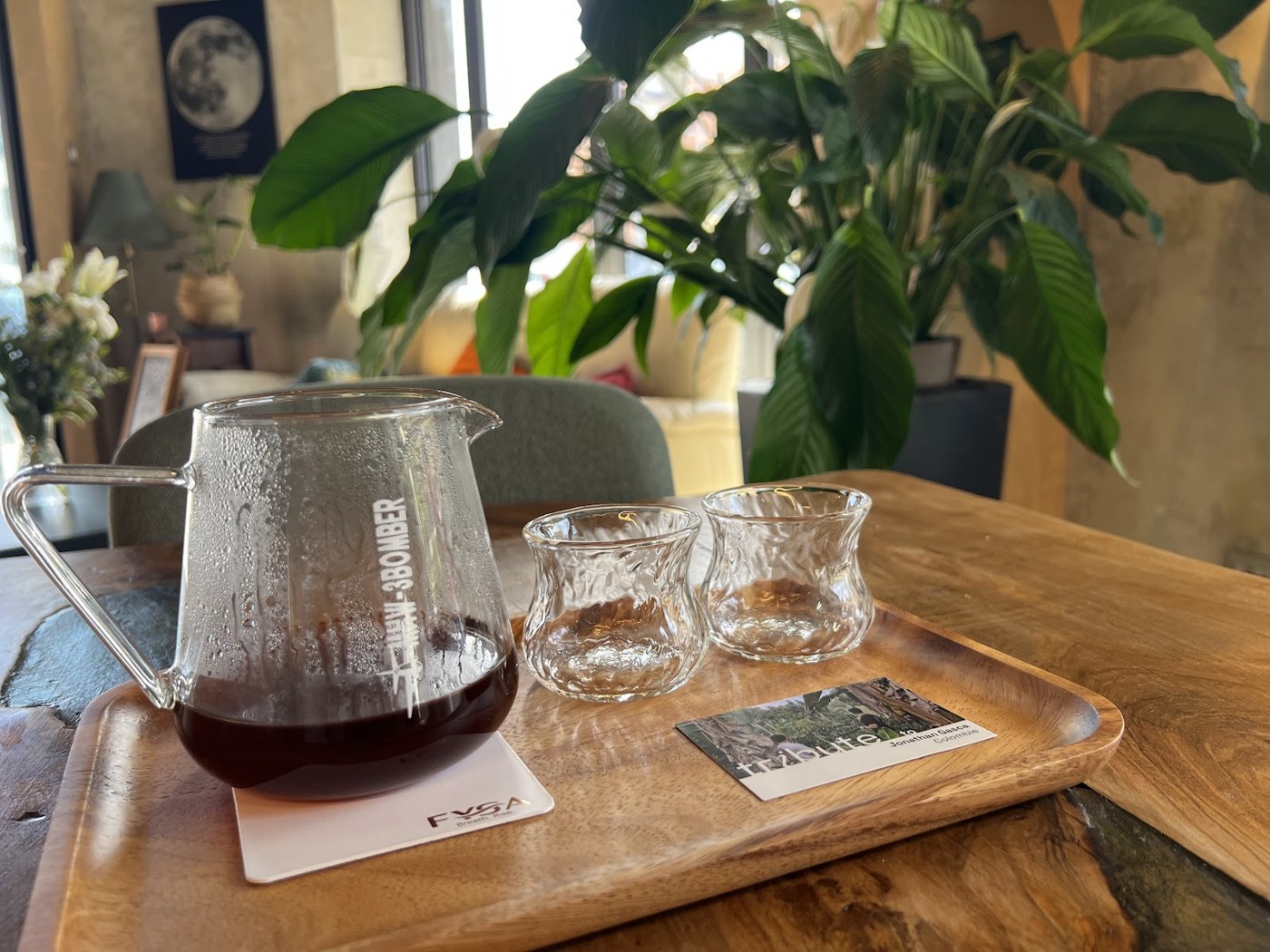
But what do 80 points mean? A bean without defects, grown between 1,400 and 2,200 metres of altitude, hand-picked one cherry at a time, processed within hours, sun-dried with care, and finally roasted to bring out — not to cover — its origin.
Altitude matters
At high altitude the plant grows slowly. The bean takes longer to ripen, and that time fills it with sugars and acids that become complexity in the cup — notes of fruit, flowers, chocolate, honey; never the flat, woody taste of commercial coffee.
The roaster matters
A good specialty needs a roast that respects the bean: never too dark (burnt) to hide defects, never too light (raw) to look fashionable. At FYSA we chose Tribute, an artisan roastery in the Drôme, in France, co-founded by Paul Arnephy — Meilleur Ouvrier de France Torréfacteur 2018 and French Roasting Champion 2022.
The Meilleur Ouvrier de France title is the most prestigious recognition in French craftsmanship: a competition held every four years, awarded to those who represent their craft at the highest level — the same honour carried by great pastry chefs and great cooks. In coffee, it means something simple: every batch that lands on our counter was selected, roasted and checked by one of the most experienced hands in Europe.
Extraction matters
A specialty espresso needs a precise grind (often finer than commercial), water at 92–94°C, 9 bars of pressure, an extraction of 25–30 seconds. If even one of these parameters is off, the coffee changes character.
The tools: La Marzocco and Mahlkönig
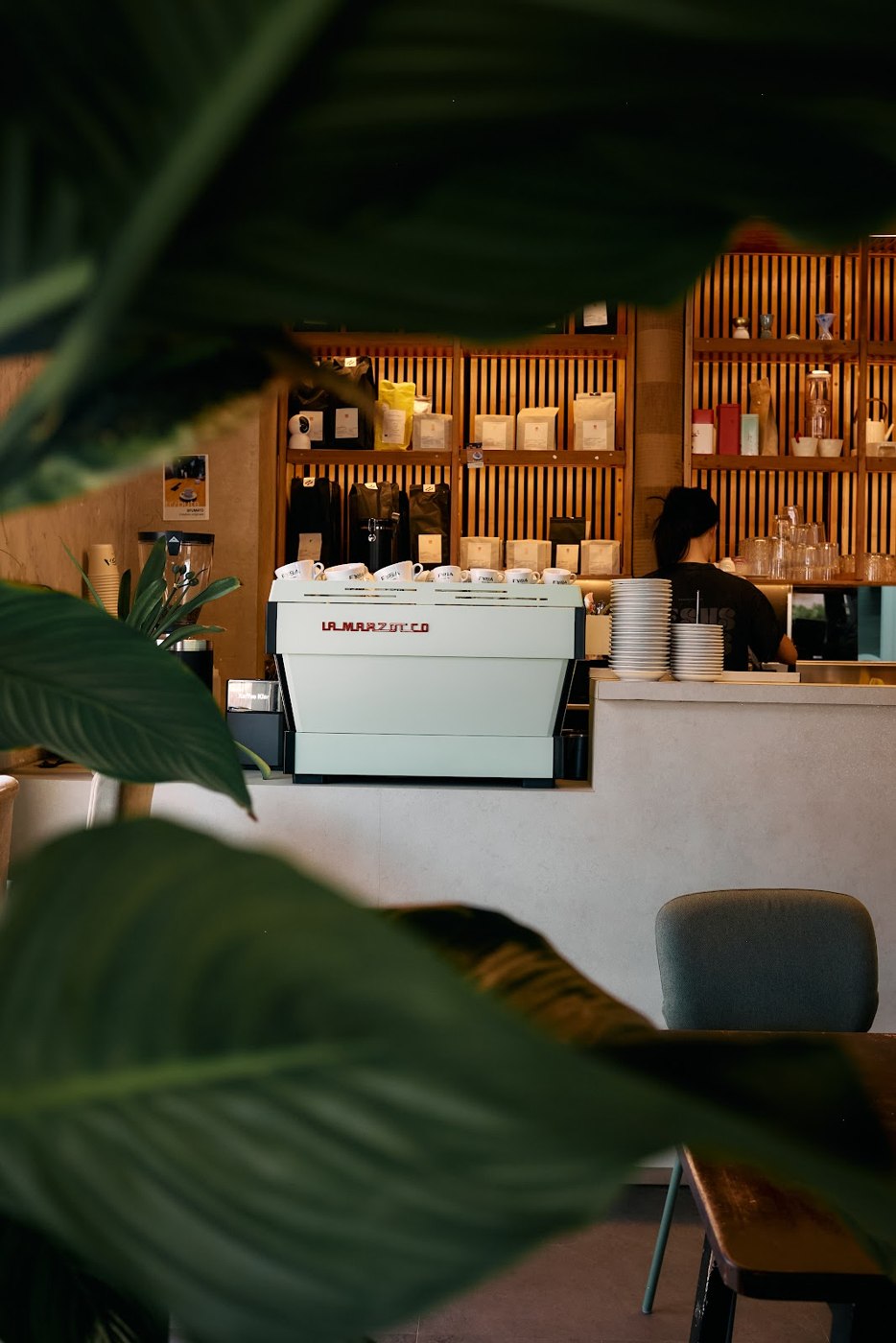
That's why we wanted two names behind the counter that coffee lovers recognise instantly. Espresso comes off a La Marzocco — hand-built in Florence since 1927, the standard of the world's best specialty bars, chosen for temperature stability that holds cup after cup. And every dose is ground to order on a Mahlkönig, the German reference for grind uniformity. These aren't showroom details: they're the last link that lets a bean roasted by a Meilleur Ouvrier de France reach the cup without losing anything along the way.
It's not just aesthetics
A commercial coffee gives you caffeine. A specialty also gives you a moment — the one where you notice a flavour you'd never caught before, or where you understand why two coffees from the same origin, roasted differently, taste different.
What to try at FYSA
If you're new to this, a flat white — low milk volume, the coffee does the talking. If you love complexity, a single-origin espresso (we try to keep at least two on the menu). If it's hot out, a cold brew steeped for 16 hours — naturally sweet, no bitterness.
Ask the barista where the coffee you're drinking comes from. If they don't know, the place isn't specialty. If they do, you might discover a small Ethiopian farm or a Colombian plantation that becomes your favourite.